 English
 Español
 Deutsch
 русский

A flame retardant car seat is a vehicle seat — whether an adult seat in a passenger car or a child safety seat — constructed with materials that resist ignition, slow the spread of fire, and limit the release of toxic combustion gases. Every new passenger vehicle sold in the United States must meet Federal Motor Vehicle Safety Standard FMVSS 302, which requires interior materials including seat fabrics to self-extinguish at a burn rate no greater than 102 mm per minute (4 inches per minute). Similar mandatory standards apply in the EU (ECE R118), China (GB 8410), and most major automotive markets worldwide.
Understanding flame retardant car seat materials matters both for vehicle manufacturers selecting seat specifications and for consumers choosing child car seats, aftermarket seat covers, or replacement upholstery. This article explains how flame retardancy works in automotive seating, which standards apply, how different materials compare, and what to look for when selecting the safest option for your vehicle.
Content
- 1 Why Flame Retardancy in Car Seats Is a Life-Safety Requirement
- 2 How Flame Retardant Car Seat Materials Work
- 3 Which Flame Retardant Standards Apply to Car Seats?
- 4 How Different Car Seat Materials Compare for Flame Retardancy
- 5 What to Look for When Choosing a Flame Retardant Child Car Seat
- 6 How Flame Retardant Car Seat Covers and Aftermarket Products Are Regulated
- 7 The Trend Toward Halogen-Free and Sustainable Flame Retardants in Car Seats
- 8 Frequently Asked Questions About Flame Retardant Car Seats
- 8.1 Q1: Are all car seats flame retardant by law?
- 8.2 Q2: Are flame retardant chemicals in car seats harmful to children?
- 8.3 Q3: Can washing a child car seat cover affect its flame retardancy?
- 8.4 Q4: Is leather safer than fabric for car seat flammability?
- 8.5 Q5: How can I verify a car seat cover's flame retardancy claims?
- 8.6 Q6: Do racing car seats need to meet different flame retardant standards?
- 9 Summary: Key Takeaways on Flame Retardant Car Seats
Why Flame Retardancy in Car Seats Is a Life-Safety Requirement
Flame retardant car seat materials are not an optional luxury — they are a critical component of automotive passive safety that provides occupants with additional escape time in the event of a vehicle fire. According to the U.S. National Fire Protection Association (NFPA), an estimated 174,000 highway vehicle fires occurred in the United States in 2022 alone, resulting in approximately 560 civilian deaths and over 1,500 injuries. In a vehicle fire, an unprotected polyurethane foam seat cushion can reach full combustion within 60 to 90 seconds; a flame-retardant treated equivalent can extend that window to 3 to 5 minutes or more — enough time for occupants to escape.
The Role of Seat Materials in Vehicle Fire Spread
Vehicle seat assemblies typically contain three material layers that each contribute to fire behaviour: the outer seat fabric or leather covering, the intermediate foam padding layer (usually polyurethane, accounting for 60–70% of total seat combustible mass), and the structural substrate of plastic shell components. In a non-treated seat, the outer fabric ignites first, rapidly transferring heat to the foam beneath, which then produces a high-energy fire with significant black smoke and toxic gas output. Flame retardant car seat designs interrupt this chain at one or more of these layers.
How Flame Retardant Car Seat Materials Work
Flame retardant performance in car seat materials is achieved through four primary mechanisms, often used in combination to meet regulatory thresholds at minimum cost and weight impact.
1. Chemical Flame Retardant Additives
Halogenated flame retardants (brominated and chlorinated compounds) were historically the most widely used additives in automotive seat foams and fabrics. They work by releasing halogen radicals during combustion that interrupt the free-radical chain reaction of the flame. However, due to health and environmental concerns — particularly related to persistence in human tissue and potential endocrine-disrupting effects — the automotive industry has been progressively shifting toward halogen-free flame retardants including phosphorus-based, nitrogen-based (melamine and guanidine compounds), and intumescent systems. Major automotive OEMs now specify halogen-free flame retardancy in their material standards.
2. Inherently Flame Retardant Fibres
Some car seat fabrics achieve flame resistance through the use of inherently flame-retardant fibres whose chemical structure prevents easy ignition, rather than through added chemical treatments. Key examples include:
- Modacrylic fibres — a copolymer of acrylonitrile containing halogen-bearing co-monomers built into the polymer chain; Limiting Oxygen Index (LOI) of approximately 30–34%; widely used in automotive seat fabrics
- FR polyester (PET) — polyethylene terephthalate modified with phosphorus co-monomers during polymerisation; LOI approximately 28–32%; increasingly used as a halogen-free alternative
- Meta-aramid (such as Nomex-type fibres) — extremely high LOI of 28–30% with excellent char formation; used in high-performance racing and specialist vehicle seating; significantly more expensive than standard automotive fibres
- Glass fibre composites — used in structural seat components; inherently non-combustible but require flame-retardant resin matrices to prevent binder burning
3. Flame Retardant Foam Formulations
Flame retardant polyurethane foam for car seat cushions is produced by incorporating reactive or additive flame retardants into the foam formulation during manufacturing. Common approaches include adding melamine powder (a nitrogen-based intumescent that forms a protective char layer), aluminium hydroxide (ATH) as a mineral filler that releases water vapour when heated, or phosphate-based reactive polyols that become chemically bonded into the foam polymer network. Melamine-loaded foams can reduce burn rate by up to 70% compared to untreated foam at a loading of 20–30% by weight, though at a cost of increased foam density and slightly reduced comfort.
4. Barrier Layer Systems
A thermal barrier layer — a thin, woven or nonwoven fabric laminated between the outer seat cover and the foam — can provide effective flame retardancy even when the outer fabric has limited FR treatment. These barrier fabrics, typically made from FR-treated polyester or glass-reinforced knits, act as a heat shield that delays ignition of the foam beneath. Barrier layer systems are increasingly used in child car seat construction as they allow softer, less chemically treated outer fabrics to still meet flammability standards.
Which Flame Retardant Standards Apply to Car Seats?
Compliance with the correct flame retardant standard is mandatory for all automotive seating sold in regulated markets. The applicable standard depends on geography, vehicle type, and whether the seat is an OEM vehicle seat or an aftermarket child safety seat.
| Standard | Region | Applies To | Key Requirement | Test Method |
| FMVSS 302 | USA | All vehicle interior materials | Burn rate max 102 mm/min | Horizontal flame spread |
| ECE R118 | EU / UNECE | Bus and coach interiors | Burn rate + smoke density limits | Horizontal + vertical spread |
| GB 8410 | China | All vehicle interior materials | Burn rate max 100 mm/min | Horizontal flame spread |
| ISO 3795 | International | Vehicle interior trim and upholstery | Burn rate max 100 mm/min | Horizontal flame spread |
| FMVSS 213 | USA | Child restraint systems | Flammability per FMVSS 302 + structural test | Combined safety testing |
| ECE R44 / R129 | EU | Child restraint systems | Material flammability requirements included | Combined safety testing |
Table 1: Key global flame retardant standards applicable to car seat materials, by region, application scope, and primary test requirement.
How Different Car Seat Materials Compare for Flame Retardancy
The flame retardant performance of a car seat depends heavily on the specific material combination used. The table below compares the most common seat cover material types found in passenger vehicles on both safety and practical grounds.
| Material | FR Mechanism | LOI (%) | Smoke Output | Typical Application | Relative Cost |
| FR-treated polyester fabric | Chemical additive or co-monomer | 28 - 32 | Moderate | Mass-market vehicle seats | Low |
| Modacrylic blend fabric | Inherent fibre chemistry | 30 - 34 | Low to Moderate | Mid-range vehicle seats, child seats | Moderate |
| Genuine leather | Natural protein structure + tanning | 22 - 26 | Moderate (toxic fumes) | Premium vehicle seats | High |
| PVC / synthetic leather | Chlorine content (halogenated) | 26 - 30 | High (HCl gas) | Budget vehicles, seat covers | Low |
| FR polyurethane foam | Melamine / phosphate additive | 22 - 28 | Moderate | All vehicle seat cushions | Low to Moderate |
| Meta-aramid fabric | Inherent molecular stability | 28 - 32 | Very Low | Racing, military, emergency vehicles | Very High |
Table 2: Comparison of common car seat materials by flame retardant mechanism, Limiting Oxygen Index, smoke output, typical application, and relative cost.
The Limiting Oxygen Index (LOI) is a key laboratory metric: it measures the minimum percentage of oxygen in a nitrogen-oxygen atmosphere needed to sustain combustion. Normal air contains approximately 21% oxygen, so any material with an LOI above 21% will self-extinguish in normal air — the higher the LOI, the greater the inherent flame resistance.
What to Look for When Choosing a Flame Retardant Child Car Seat
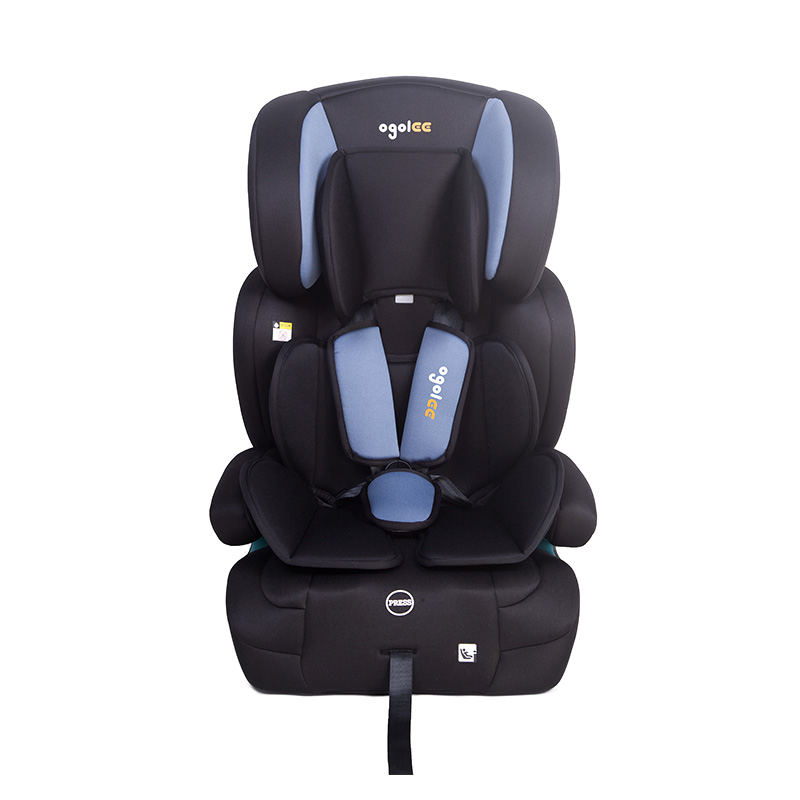
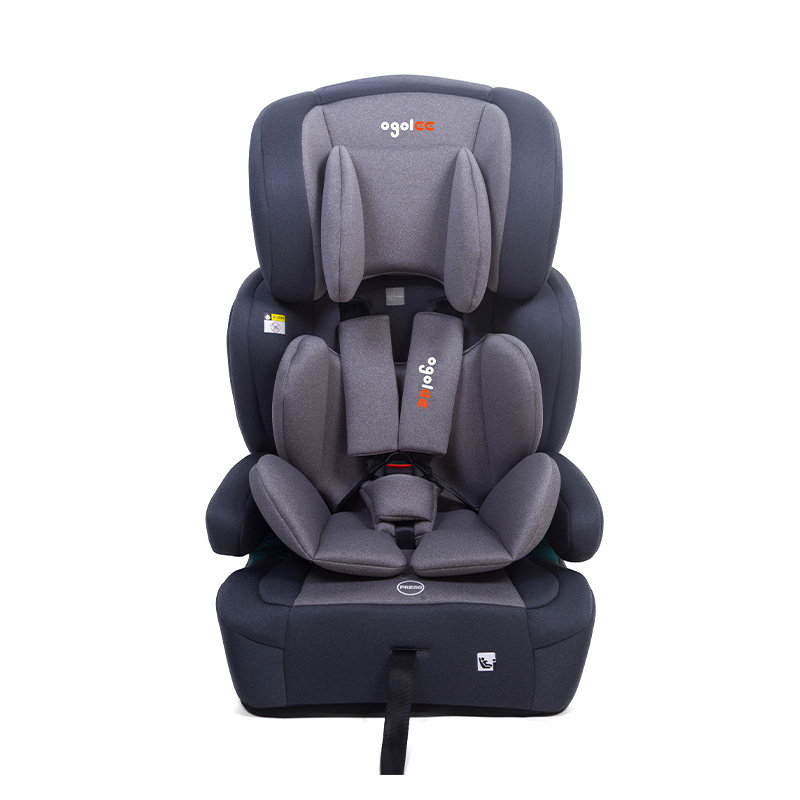
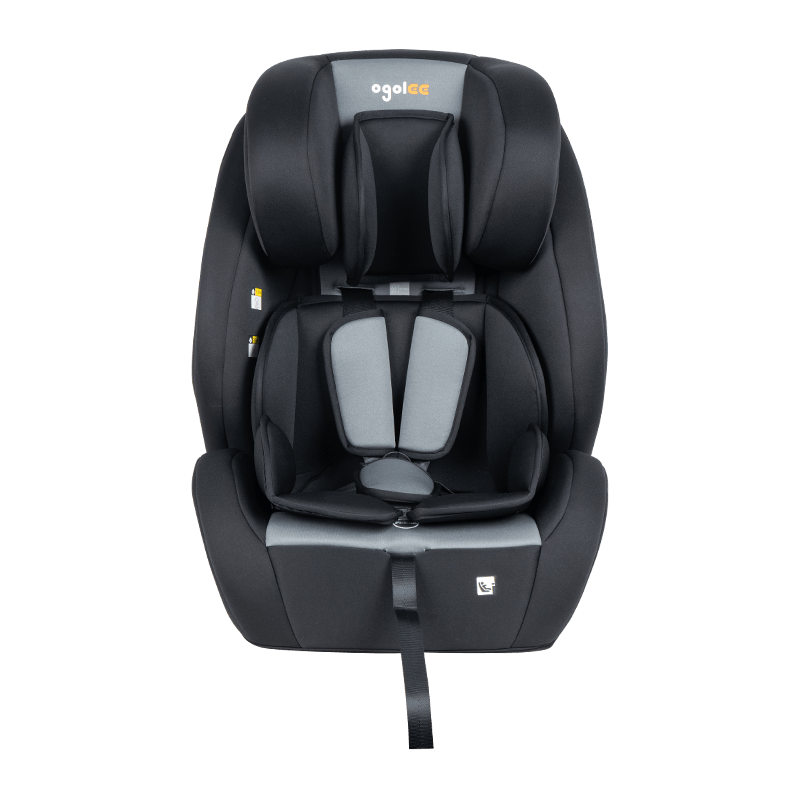
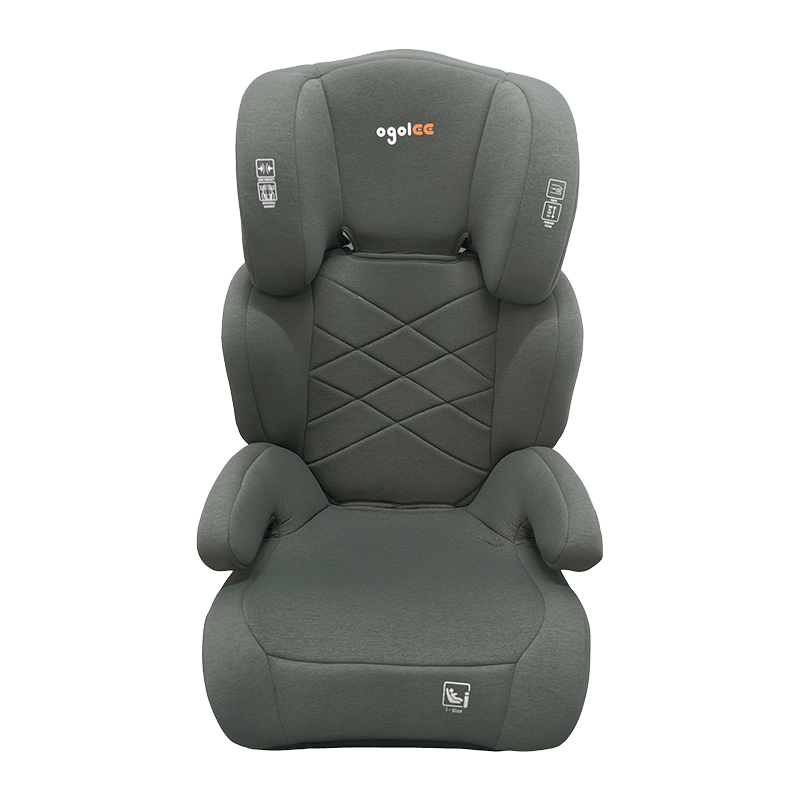
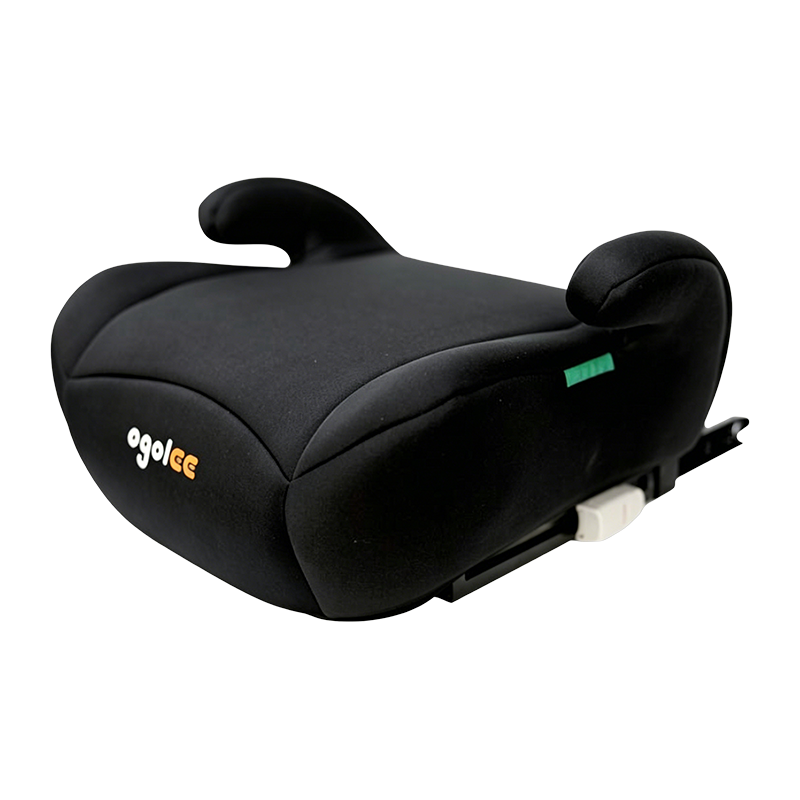
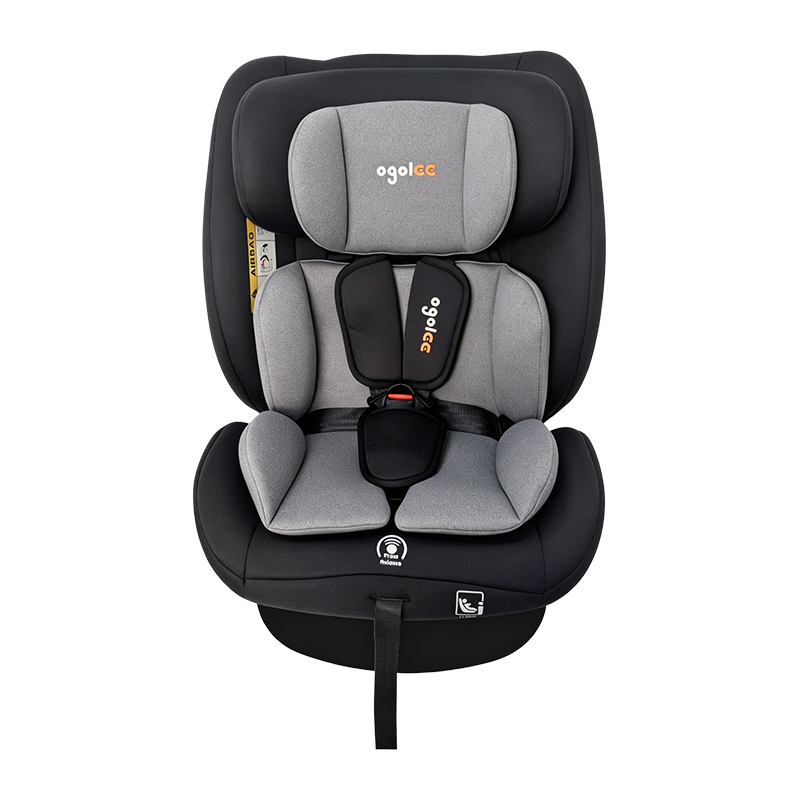
For parents selecting a flame retardant child car seat, the challenge is that most products simply state "meets FMVSS 302" or "meets ECE R44/R129" without disclosing which specific flame retardant chemicals are used in the foam or fabric. This matters because some families with chemically sensitive children, or those concerned about long-term chemical exposure, prefer seats made with halogen-free or additive-free FR materials.
Key Questions to Ask When Evaluating a Child Car Seat
- Which FR chemicals are used in the foam? — look for seats that disclose use of phosphorus-based or melamine-based FR systems rather than brominated flame retardants; many manufacturers publish materials declarations on their websites
- Does the seat use a barrier layer? — seats using a thermal barrier fabric between the cover and the foam can meet flammability standards with less chemical treatment in the outer fabric, reducing direct skin contact with FR compounds
- What fabric is used on the cover? — inherently FR fabrics (FR polyester, modacrylic blends) are preferable to aftermarket topical FR chemical treatments, which can wash out over time and lose effectiveness
- Is there third-party chemical testing documentation? — certifications such as OEKO-TEX Standard 100 confirm that the fabric has been tested for harmful substances including certain flame retardant chemicals; however, note that OEKO-TEX does not test the foam core
- Does the seat meet the applicable structural standard? — flammability compliance is only one part of child seat safety; ensure the seat also meets FMVSS 213 (USA), ECE R44 or the newer R129 (i-Size in Europe), or the equivalent standard for your country
How Flame Retardant Car Seat Covers and Aftermarket Products Are Regulated
Aftermarket flame retardant car seat covers — whether fitted to adult vehicle seats or used as replacement covers on child seats — must also comply with the same flammability standards as OEM materials in most jurisdictions. In the USA, any material installed in a motor vehicle interior is subject to FMVSS 302. Installing a non-compliant seat cover is technically a violation of federal law and may also void vehicle insurance coverage in the event of a fire claim.
Risks of Non-Compliant Aftermarket Seat Covers
- Rapid fire spread — a non-FR fabric cover fitted over a standard foam seat can dramatically accelerate fire growth, eliminating the escape-time benefit that OEM flame retardancy provides
- Toxic gas production — cheap seat covers made from unspecified synthetic materials may produce high concentrations of toxic combustion gases (hydrogen cyanide, carbon monoxide, acrolein) that incapacitate occupants before flames reach them
- Child seat cover replacements — many parents wash and replace child seat covers; only manufacturer-approved replacement covers should be used, as aftermarket covers may not maintain the thermal barrier function required for flammability compliance
What to Look for on an Aftermarket Car Seat Cover Label
A compliant flame retardant car seat cover should clearly state compliance with FMVSS 302 (USA) or ISO 3795 (internationally) on its product label or documentation. Look for test certification from an accredited laboratory rather than a self-declaration, and verify that the tested burn rate result is documented — not just that the product "meets" the standard.
The Trend Toward Halogen-Free and Sustainable Flame Retardants in Car Seats
The automotive industry is accelerating its transition away from legacy halogenated flame retardant systems in car seat materials, driven by tightening chemical regulations, OEM sustainability commitments, and consumer demand for cleaner interior air quality.
Regulatory Drivers
The EU's REACH regulation has restricted or is in the process of restricting numerous brominated flame retardants previously used in automotive interiors, including decabromodiphenyl ether (DecaBDE) and hexabromocyclododecane (HBCD). California's Proposition 65 and TB 117-2013 (which notably eliminated mandatory foam FR requirements for furniture while maintaining them for vehicles) have shaped North American automotive supplier chemistry. These regulatory pressures have accelerated R&D investment in phosphorus-based, nitrogen-based, and silicone-based halogen-free FR systems that deliver equivalent or superior flame performance with significantly lower toxicity profiles.
Electric Vehicle (EV) Seat Flammability Considerations
The growth of electric vehicles has introduced new considerations for flame retardant car seat performance. In a conventional vehicle fire, the primary ignition source is the fuel system. In an EV thermal runaway event, lithium-ion battery fires burn at temperatures exceeding 600 degrees Celsius, produce their own oxygen, and are extremely difficult to extinguish — meaning that the flame retardancy of seat materials faces a far more intense thermal challenge than FMVSS 302's relatively low-energy horizontal burn test simulates. Several automotive OEMs and Tier 1 seat suppliers are now voluntarily testing seat materials to more demanding standards than legally required, specifically to address EV fire scenarios.
Frequently Asked Questions About Flame Retardant Car Seats
Q1: Are all car seats flame retardant by law?
Yes, in most major markets. In the United States, all new vehicle interior materials — including seat fabrics and foam — must comply with FMVSS 302 as a condition of vehicle sale. Child restraint systems must comply with both FMVSS 302 (flammability) and FMVSS 213 (structural performance). In the EU, ECE R44 and the newer R129 standard include flammability requirements for child restraints. However, "compliant" does not mean "maximally fire-safe" — it means the material meets a minimum pass/fail threshold that was established in 1971 and has not been substantially updated since.
Q2: Are flame retardant chemicals in car seats harmful to children?
This is a nuanced question. Some older flame retardant chemicals previously used in car seat foam and fabric — particularly certain brominated and chlorinated compounds — have been associated with health concerns including potential endocrine disruption and developmental toxicity at elevated exposure levels. The key word is "exposure": flame retardant chemicals bonded into a foam polymer network have very low migration rates under normal conditions. However, dust from degrading foam (which young children may ingest via hand-to-mouth contact) can carry FR residues. Manufacturers have been progressively reformulating with safer alternatives. Requesting material safety data sheets or chemical disclosure information from manufacturers is reasonable for concerned parents.
Q3: Can washing a child car seat cover affect its flame retardancy?
It depends on the type of FR treatment used. Inherently flame retardant fibres (modacrylic, FR polyester co-polymer) retain their properties permanently through washing because the FR character is built into the fibre's molecular structure — not applied as a surface coating. Topical FR treatments applied to standard polyester or cotton fabrics can degrade with repeated washing; typically 20 to 50 wash cycles at 60 degrees Celsius can reduce compliance. Always use manufacturer-approved wash settings and never use tumble-drying unless explicitly stated — heat degradation of surface treatments is accelerated in a dryer. Only use replacement covers approved by the seat manufacturer to ensure ongoing flammability compliance.
Q4: Is leather safer than fabric for car seat flammability?
Genuine leather has a lower Limiting Oxygen Index than high-quality FR-treated polyester or modacrylic seat fabric, meaning it is actually somewhat more flammable under standard test conditions. However, leather tends to char rather than melt, and does not drip burning material in the way that some synthetic fabrics can. In practice, both leather and compliant fabric seats meet the same FMVSS 302 minimum standard. For maximum fire resistance, FR fabric with a thermal barrier layer underneath generally outperforms standard leather across both ignition resistance and burn rate metrics.
Q5: How can I verify a car seat cover's flame retardancy claims?
Ask the supplier for a laboratory test report from an accredited third-party testing facility confirming compliance with FMVSS 302 (USA), ISO 3795 (international), or the applicable regional standard. The report should state the measured burn rate in mm/min — not just a pass/fail result. For child seat replacement covers, verify that the cover is specifically approved by the seat manufacturer, as third-party covers may alter the seat's tested fire performance. Be cautious of online products that only state "flame resistant" without citing a specific test standard or providing documentation.
Q6: Do racing car seats need to meet different flame retardant standards?
Yes — significantly more demanding ones. Racing car seats used in FIA-regulated motorsport must comply with FIA Standard 8855-2021 (seats) or FIA 8856-2018 (driver clothing), which require materials to withstand direct flame contact for a minimum of 12 seconds without through-penetration. These standards are vastly more demanding than FMVSS 302's horizontal burn test and typically require multi-layer aramid, carbon fibre, or glass fibre composite constructions that are impractical for road vehicle mass production due to cost and weight. Road-use FIA homologated seats are available for track-day and competition use and represent the highest level of flame retardant car seat technology commercially accessible to private consumers.
Summary: Key Takeaways on Flame Retardant Car Seats
Flame retardant car seats are a mandatory safety feature in all regulated vehicle markets, providing critical additional escape time in the event of a vehicle fire. The technology behind automotive seat flammability spans chemical additives, inherent fibre properties, foam formulation, and barrier layer systems — each with different performance, health, and cost profiles.
- All new vehicle seats must comply with FMVSS 302 (USA), ISO 3795 (international), or equivalent regional standards — minimum burn rate of 102 mm/min
- Inherently FR fibres (FR polyester, modacrylic) are more durable than topical treatments and maintain performance through washing cycles
- Halogen-free FR systems are replacing legacy brominated and chlorinated additives across the automotive supply chain, driven by REACH and similar regulations
- EV fire scenarios present more extreme thermal challenges than conventional automotive fires, prompting voluntary testing beyond statutory minimums
- Aftermarket seat covers must also meet flammability standards — always verify compliance documentation before fitting any non-OEM cover material in your vehicle
- Child seat replacement covers should only be manufacturer-approved versions to maintain tested flammability performance