 English
 Español
 Deutsch
 русский


No — an infant car seat does not need a base. Almost every infant carrier (the rear-facing "bucket" seat you lift out of the car) is approved for a baseless installation, in which the vehicle's three-point seatbelt is routed through the carrier's own belt path and locked. A base is a docking frame that stays in the car; it changes how the seat is anchored and how fast you can click the carrier in and out, not whether the child is protected.
Two definitions keep the rest of this simple. A base is a separate frame fixed to the vehicle with ISOFIX/LATCH anchors or with the seatbelt, often fitted with a support leg or load leg that transfers crash forces into the vehicle floor. A baseless install skips that frame entirely: the carrier is belted straight onto the vehicle seat, with the shoulder section usually wrapped around the back of the carrier — the routing European standards describe as a lap-and-shoulder belt path.
- Base fitted: install once, then click the carrier in and out dozens of times a week.
- Baseless: belt the carrier in on every trip, but carry nothing extra and buy nothing extra.
- Either way, the manual must list that carrier as approved for that method — this is the only rule that cannot be negotiated.
Content
- 1 What an Infant Car Seat Base Actually Does
- 2 Base vs Baseless: What Really Changes
- 3 When a Base Earns Its Place
- 4 When Baseless Is the Better Call
- 5 Do You Need a Base in Every Car?
- 6 The Checks That Matter More Than Base vs Baseless
- 7 What Buyers Sourcing Infant Seats Should Compare
- 8 Frequently Asked Questions
What an Infant Car Seat Base Actually Does
A base fixes the anchor points, locks in the recline angle once, and on many designs adds a support leg that channels crash energy into the floor rather than the seat cushion. It supports the same belt-and-anchor logic the vehicle seatbelt already uses; it does not stack an extra layer of protection on top of it.
That is why "clicked into a base" is not a synonym for "safer". Whether a carrier performs well depends on how firmly the whole system is anchored, whether the recline matches the child's age, and whether the person installing it gets it right every single time. A base mainly raises the odds that the install is repeatable — which, in daily family use, is worth a great deal.
Base vs Baseless: What Really Changes
The differences below are practical ones about handling, time and cost, not crash-test verdicts.
| Aspect | With a base | Baseless (seatbelt install) |
|---|---|---|
| Time per trip | A few seconds; the carrier clicks and releases | One to three minutes to thread, tension and check the belt |
| Consistency | Recline and tension set once and left alone | Re-checked every time, so small errors creep in |
| Support leg or load leg | Often available as part of the base | Not possible |
| Cost | Base may be sold separately; a second base for a second car adds cost | No additional hardware |
| Storage and travel | Bulky frame left behind in the car | Nothing to store; works in any car with a three-point belt |
| Best suited to | One main car, frequent short trips | Taxis, rentals, flights, occasional-use cars |
| Main risk | Assuming any base fits any carrier — they are model-specific | Loose belt, wrong routing, incorrect recline angle |
When a Base Earns Its Place
A base earns its place in the daily routine rather than in the crash statistics, and the pattern is fairly predictable.
- One child, one main car, several trips a day. Clicking a sleeping baby in and out without re-threading a belt is the entire point.
- Two caregivers sharing the same vehicle. The install stays identical no matter who is driving, which removes a common source of error.
- Awkward belt geometry. Deep bucket seats, short belt stalks or a centre seat with a long buckle can make a baseless routing a two-person job.
- Support-leg geometry wanted. A load leg exists only on a base, so households that specifically want that load path need one.
- A known 12–15 month infant stage. Set the recline correctly once and stop thinking about it.
When Baseless Is the Better Call
Baseless is the smarter choice whenever the carrier moves between cars more often than it stays in one.
- Air travel, taxis and rentals. A base is dead weight in the boot; a belted carrier works in any vehicle with a three-point belt.
- Grandparents' or occasional-use cars. A second base for four trips a month rarely justifies the spend.
- Vehicles without ISOFIX, or where the ISOFIX anchors sit under stiff seat cushions that block access.
- Price-led purchases. A baseless-approved carrier plus a correctly routed belt costs nothing extra.
- Small boots, narrow parking, city flats. A spare frame needs somewhere to live.
Do You Need a Base in Every Car?
No. You need a correctly installed restraint in every car the child rides in, and that is not the same requirement. Three workable setups cover most families:
- Base in the main car, baseless elsewhere. The cheapest route, and perfectly legitimate provided the manual permits the belt-only method.
- Two bases, one carrier. The fastest route; check the spare base is the exact model listed for that carrier and inspect the manufacture date.
- Base plus a second seat. Worth it when the second car is used often or when the child is close to outgrowing the carrier.
Two cautions apply. Bases are carrier-specific, so a base from a different model will not lock correctly even if the connector type matches. And bases expire with the seat they belong to; a second-hand base of unknown history is a false economy, because an invisible impact can leave the frame compromised.
The Checks That Matter More Than Base vs Baseless
Install quality decides the outcome far more than the base question does, and four checks catch most real-world errors.
- Movement at the belt path: no more than roughly 2.5 cm (1 inch) front-to-back or side-to-side once tightened.
- Recline angle: newborns need about 30–45 degrees to keep the airway open; use the base's recline foot or the carrier's own indicator, not folded blankets under the seat.
- Harness and handle: straps snug with no bulky coat underneath, chest clip at armpit level, handle locked in the position the manual specifies.
- Provenance: not expired, never involved in a crash, and no third-party inserts that did not come with the seat.
If the belt path or the routing direction is unclear, follow written step-by-step installation guidance rather than a remembered video — belt routing is the single step most often done backwards.
What Buyers Sourcing Infant Seats Should Compare
For importers and distributors, the base question is a packaging and SKU decision before it is a safety one, and the two programme types behave very differently in a warehouse.
| Consideration | Base-included system | Base-less carrier |
|---|---|---|
| Approval path | Usually height-based ECE R129 / i-Size with an ISOFIX base and support leg | ECE R129 or R44 carrier approved for belt routing |
| Carton volume per unit | Higher; two components to pack and protect | Lower; single carton, better container utilisation |
| SKU management | Carrier, base and spare base tracked separately | One SKU per colourway |
| After-sales exposure | Base availability must be maintained for years | Fewer parts to stock |
| Market fit | High car ownership, ISOFIX-equipped fleets, premium retail | Ride-hail heavy cities, price-led channels, rental partners |
In practice, the strongest catalogue carries both: a height-based 40–150 cm seat that grows with the child, and a lighter carrier for travel-led buyers. Our car seat range is organised along exactly that split, with ECE R129 and R44 families grouped by height and weight band.
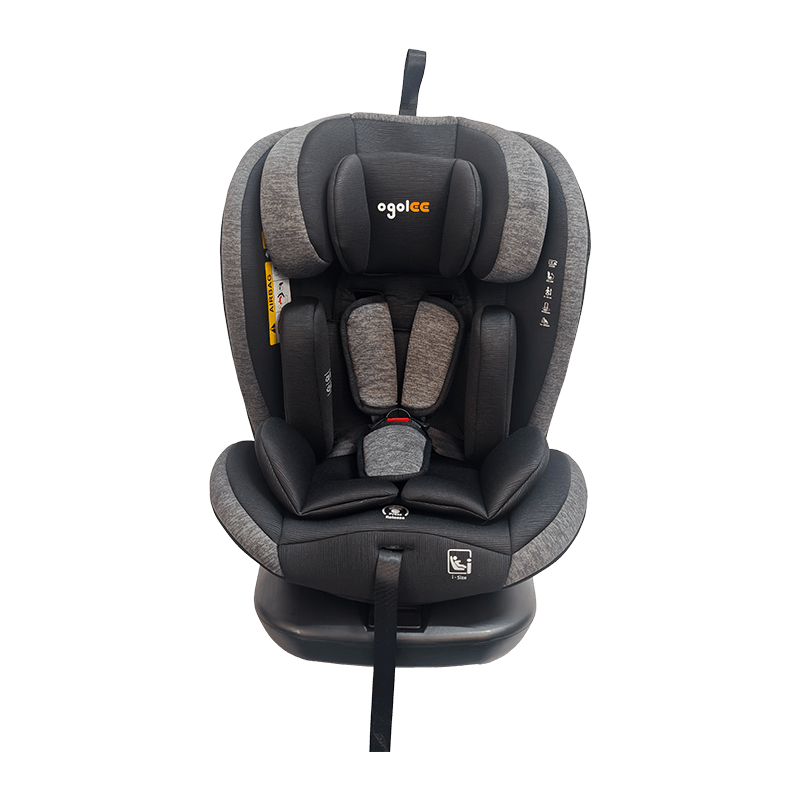
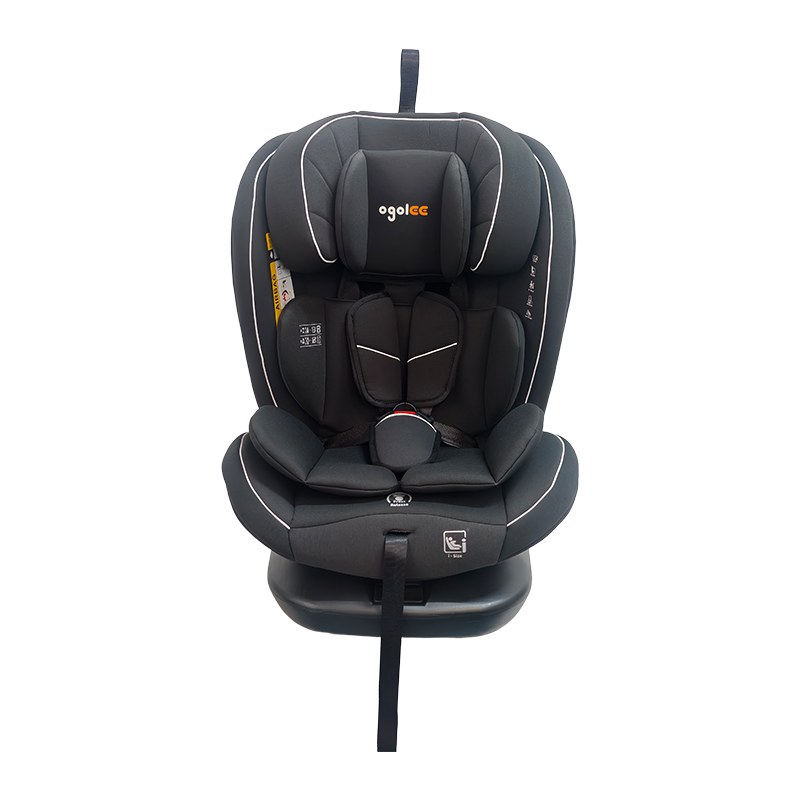
 OG801A 40–150 cm Rotating i-Size Car SeatA height-based ECE R129/04 seat from 40–150 cm with 360-degree rotation, ISOFIX and Top Tether, designed to stay installed and swivel for daily access.View Product →
A 360-degree rotating 40–150 cm model removes the base-versus-baseless decision from the daily routine entirely, because the seat stays installed and swivels for access.
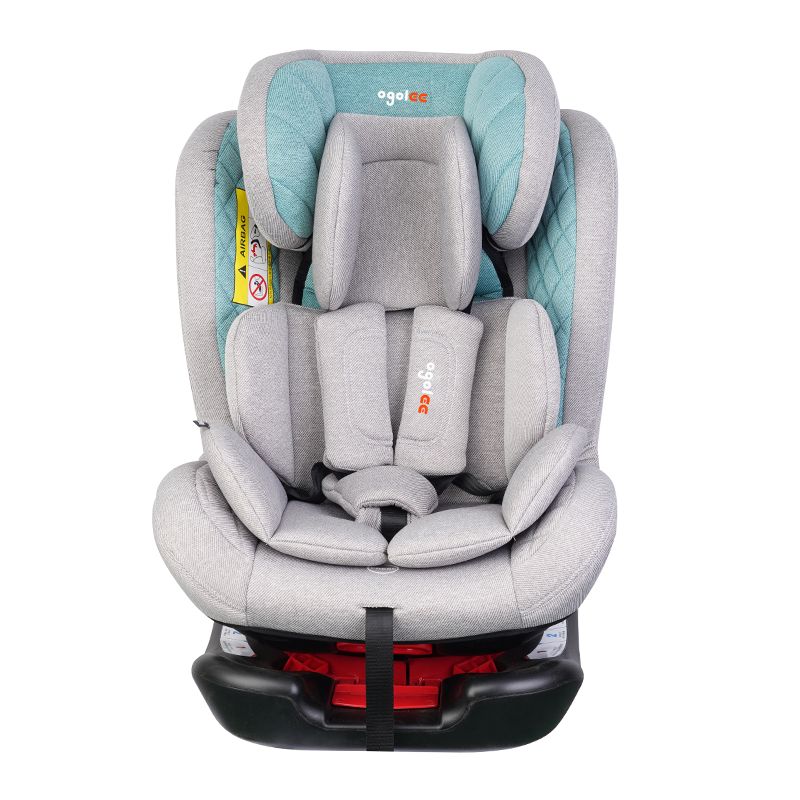 ZK701A 0–36 kg R44 ISOFIX Rotating Car SeatAn ECE R44/04 Group 0123 seat covering 0–36 kg with ISOFIX, 360-degree rotation and a 165-degree recline, suited to markets still stocking R44 alongside R129.View Product →
For buyers serving markets where R44 stock still sells alongside R129, a 0–36 kg ISOFIX seat covers the full group span with one reference number.
Frequently Asked Questions
Can any infant car seat be used without a base?
Not automatically — check the manual. Most infant carriers are approved for a seatbelt-only install, but a minority are base-dependent, and using an unapproved method voids the certification.
Is a baseless install less safe than a base install?
No, provided the belt routing and tension are correct. The base mainly reduces the chance of human error on repeat trips; a properly belted carrier meets the same regulatory test.
Do I need a base in every car?
No. Fit a base in the car used most often and belt the carrier in elsewhere. If the second car is used daily, a spare base is faster but must be the exact model listed for that carrier.
Are car seat bases universal?
No. Bases lock only to the carriers they were designed for, and connector type alone is not proof of compatibility. Mixing parts is one of the most common and least visible installation failures.
Does a base make installation faster?
Substantially — seconds instead of minutes per trip — which matters most for short urban journeys with a sleeping baby.
The short version: a base is a convenience and consistency device, the seatbelt is the safety device, and the manual decides which method your carrier is allowed to use. Get the routing right, keep movement under an inch, and set the newborn recline honestly — those three checks outweigh every other decision in this article.