 English
 Español
 Deutsch
 русский


A non toxic car seat is one built without added flame retardant chemicals, heavy metal dyes, phthalates and similar substances of concern in its cover, foam and shell. The reliable way to confirm that is documentation, not the word "non-toxic" on the box, because that phrase is not a regulated term for child seats. Two products that look identical on a shop floor can be assembled from completely different foam and fabric.
The short answer: judge a seat on three things — what the materials actually are, which chemical tests those materials have passed, and whether the supplier will put the results in writing. Crash certification is a separate question entirely. A seat can pass every impact test and still carry padding that a careful buyer would rather avoid.
Content
- 1 What "Non Toxic" Actually Means in a Car Seat
- 2 Five Checks That Prove a Low-Chemical Seat
- 3 Materials: Where the Real Difference Hides
- 4 Certification: What It Covers and What It Does Not
- 5 Heat, Smell and Off-Gassing in Daily Use
- 6 Does the Age Band Change the Material Question?
- 7 What Wholesale Buyers Should Ask Before Committing
- 8 FAQ
What "Non Toxic" Actually Means in a Car Seat
In a car seat, "non toxic" almost always means free of added flame retardants, plus documented limits on a handful of other restricted substances in the fabric and trims.
The reason is history. Older polyurethane foams were treated with brominated flame retardants such as PBDEs, which were later shown to be persistent and toxic and are now banned in the European Union. Many foams were reformulated with organophosphate alternatives, so "flame retardant free" became a genuine selling point rather than a technical footnote. Foam and adhesive are also where most of the "new seat smell" originates.
Four other groups appear on serious buyer questionnaires: azo dyes and heavy metals in coloured fabric, phthalates in PVC trims and printed panels, formaldehyde from easy-care finishes, and volatile organic compounds released by fresh foam. None of these are visible at the point of sale, which is exactly why the paperwork matters.
| Substance group | Where it typically sits | Evidence to request |
|---|---|---|
| Added flame retardants | Polyurethane foam, padding, some cover backings | Written "no added FR" declaration plus foam specification |
| Azo dyes and heavy metals | Dyed covers, printed panels, webbing and labels | Textile test report (OEKO-TEX Standard 100 or equivalent lab report) |
| Phthalates | PVC trims, printed motifs, some faux-leather inserts | PVC-free statement and material declaration |
| Formaldehyde | Wrinkle-resistant and easy-care fabric finishes | Lab report with stated limit values and test date |
| VOCs and odour | New foam, adhesives, packaging and storage | Odour assessment note and storage guidance |
Five Checks That Prove a Low-Chemical Seat
A genuinely low-chemical seat usually comes with five pieces of evidence, and when one is missing the claim is simply unverified rather than false.
- An explicit no-added-flame-retardant statement. It should name the model and the foam, appear on a specification sheet, and survive being forwarded to a compliance team. A verbal assurance is worth very little once an order is placed.
- A textile chemical report. OEKO-TEX Standard 100 or an equivalent laboratory report with named limit values. Note the scope: it covers the cover fabric, not the foam, shell or buckle.
- The seat's own type approval. ECE R129 (i-Size) or R44 in Europe, and 3C in China. This confirms crash performance and the burning behaviour of materials, but it is not a chemical purity certificate.
- Full material disclosure. Fibre composition percentages, foam type (expanded polypropylene versus polyurethane), and shell process. Blow-moulded polypropylene is a single hollow structural piece that needs no paint or adhesive in the load path.
- A removable, washable cover. This is practical rather than symbolic: regular washing removes dust, food residue and surface contamination that accumulates over years of use.
Materials: Where the Real Difference Hides
The chemical profile of a seat is decided by four components, and the cover is only one of them.
Shell
Blow-moulded or injection-moulded polypropylene. Unpainted structural plastic avoids solvent-based coatings and decorative adhesives.
Foam
Expanded polypropylene is inherently resilient and needs no chemical treatment. Polyurethane foam is softer but is the component most often treated with flame retardants.
Cover fabric
Solution-dyed polyester, cotton blends and breathable mesh age well. Yarn-dyed fabric usually needs less surface finishing than printed panels.
Harness and trims
Webbing, buckle metal and adjusters. Nickel-plated hardware and PVC-free trims keep the contact list short.
This is why manufacturers who care about material health tend to talk about processes rather than colours. A good example is how the environmental fabric on the ZK602A is put together, where the emphasis sits on fibre choice and breathability instead of a decorative finish.
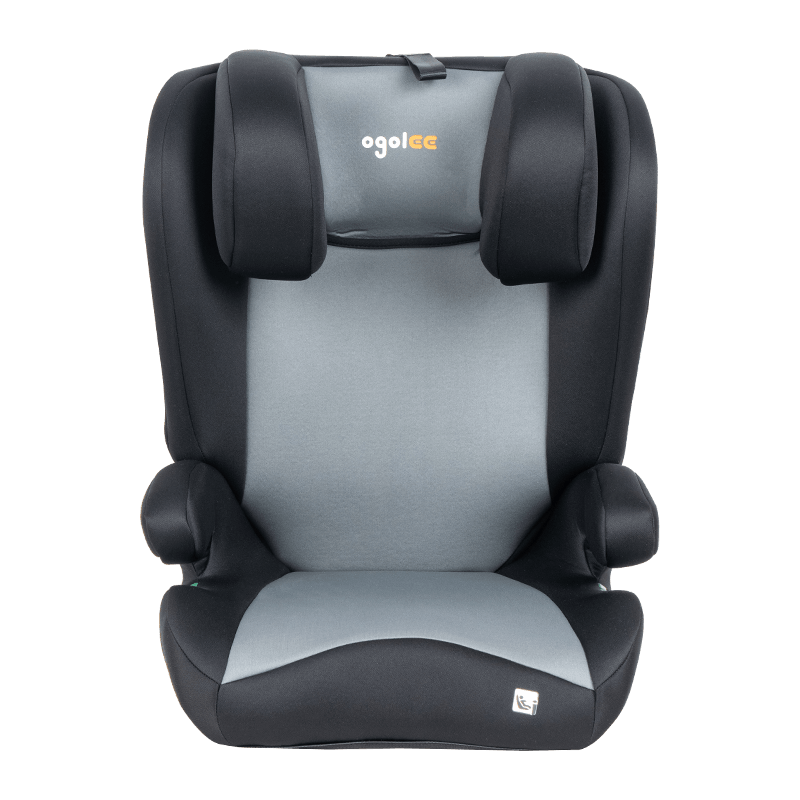
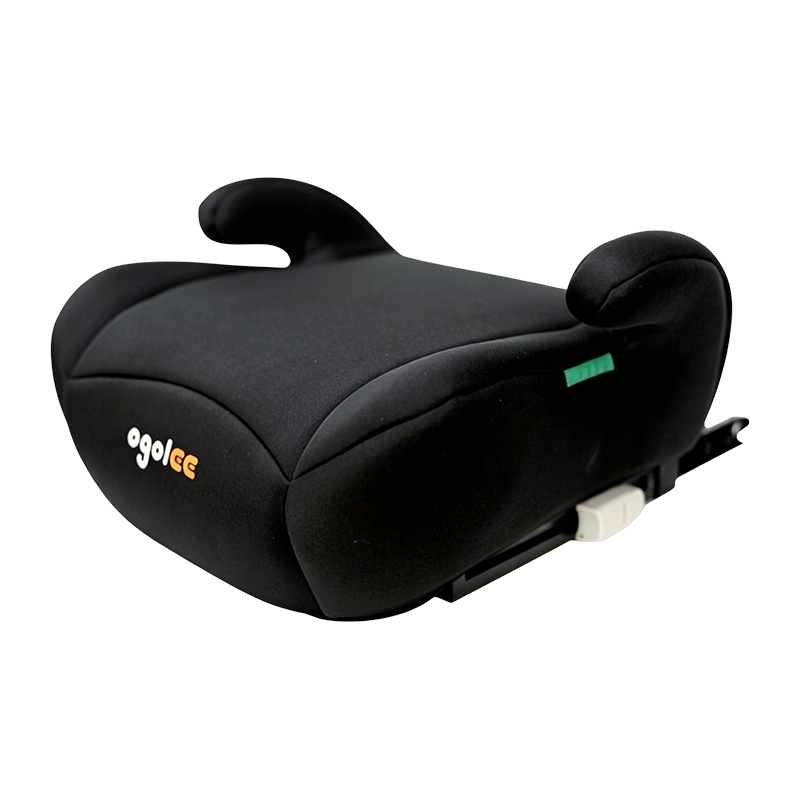
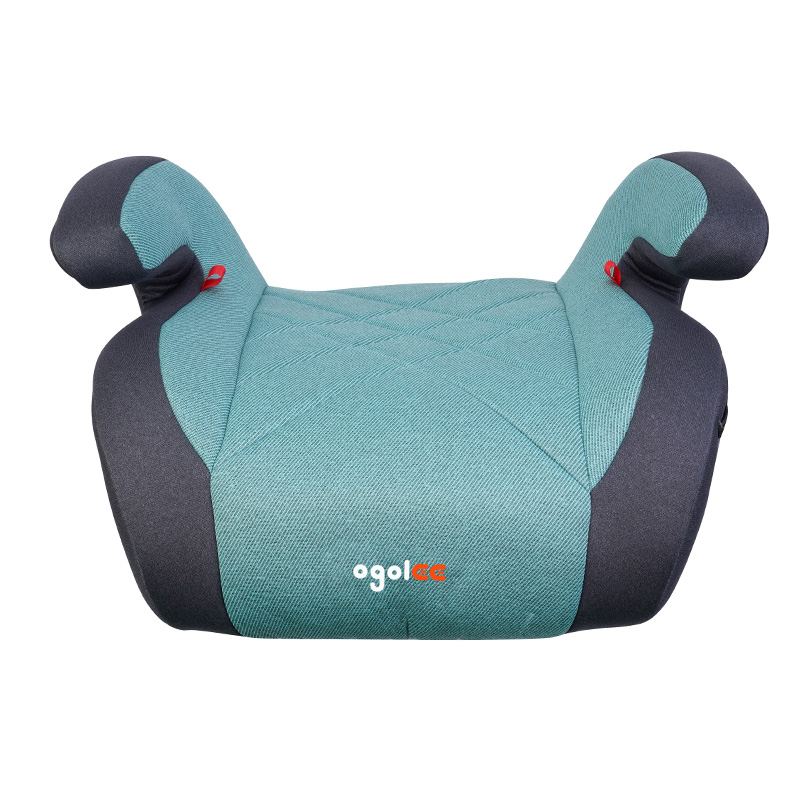 ZK602A ISOFIX Booster Car Seat with Environmental ClothA 22–36 kg booster with ISOFIX and environmental cloth, relevant when assessing fabric choices beyond crash certification.View Product →
Certification: What It Covers and What It Does Not
ECE R129 and 3C prove a seat survives a crash and that its materials resist burning; they do not certify the product as chemically clean.
R129 tightened several things at once: height-based sizing rather than weight bands, a mandatory side-impact test, and stricter requirements for installation clarity. Material flammability is part of the approval work, which is precisely why a manufacturer can build a genuinely flame-retardant-free seat and still be legal — the standard regulates burning behaviour, not the additive used to achieve it. What approval does not do is publish a chemical inventory for each model. That evidence lives in textile reports and material declarations.
Buyers who need both layers should specify them separately from the start. The product structure usually makes this straightforward: R129 seats are grouped by height (40-150cm, 76-150cm, 100-150cm, 125-150cm) and R44 seats by weight (0-36kg, 9-36kg, 15-36kg, 22-36kg), so a chemical and material requirement can be attached to each group in the full R129 and R44 car seat range rather than negotiated model by model.
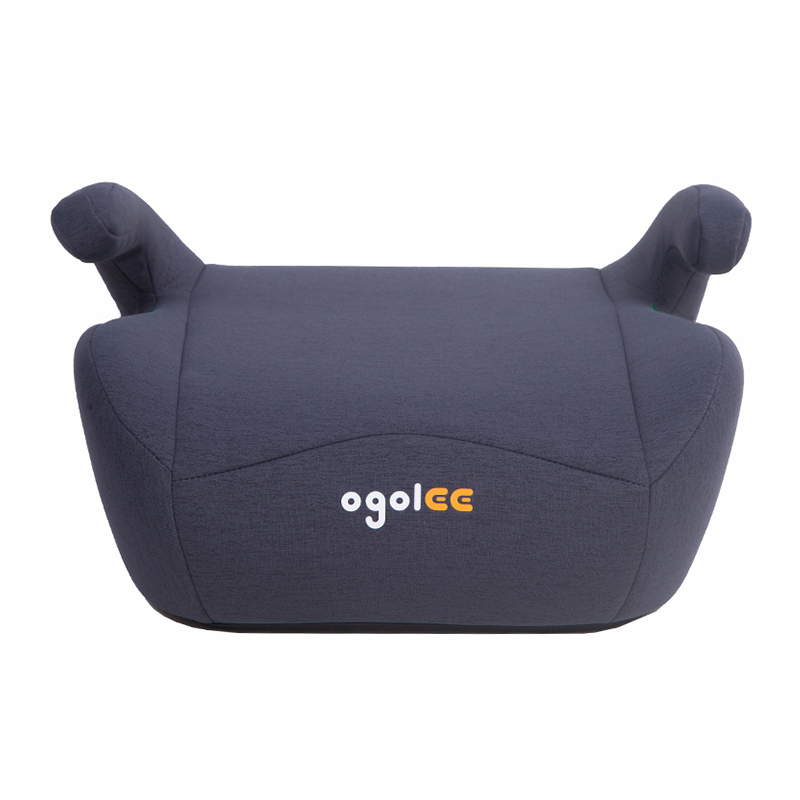
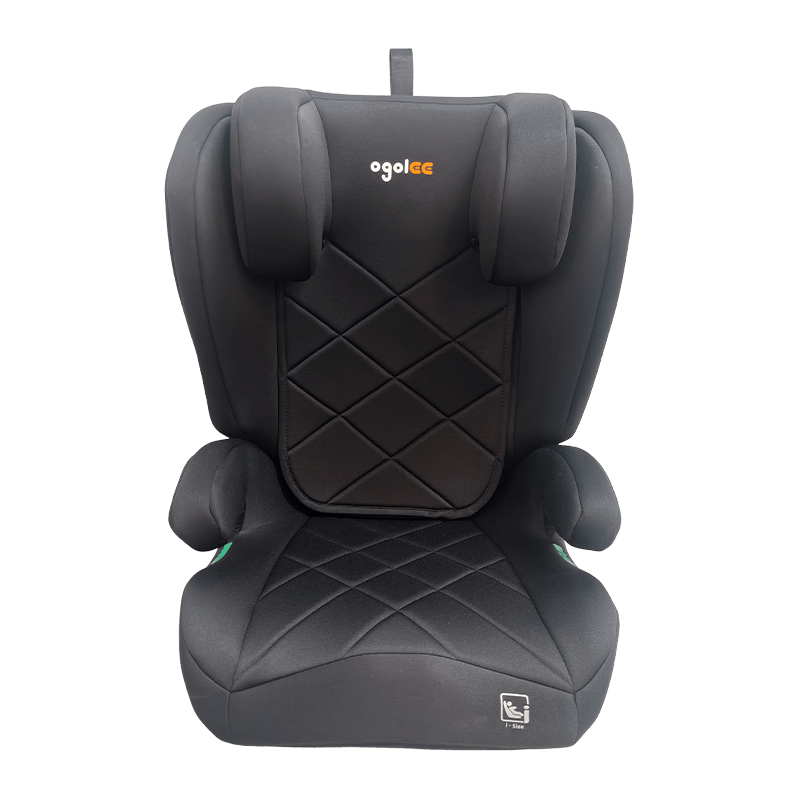
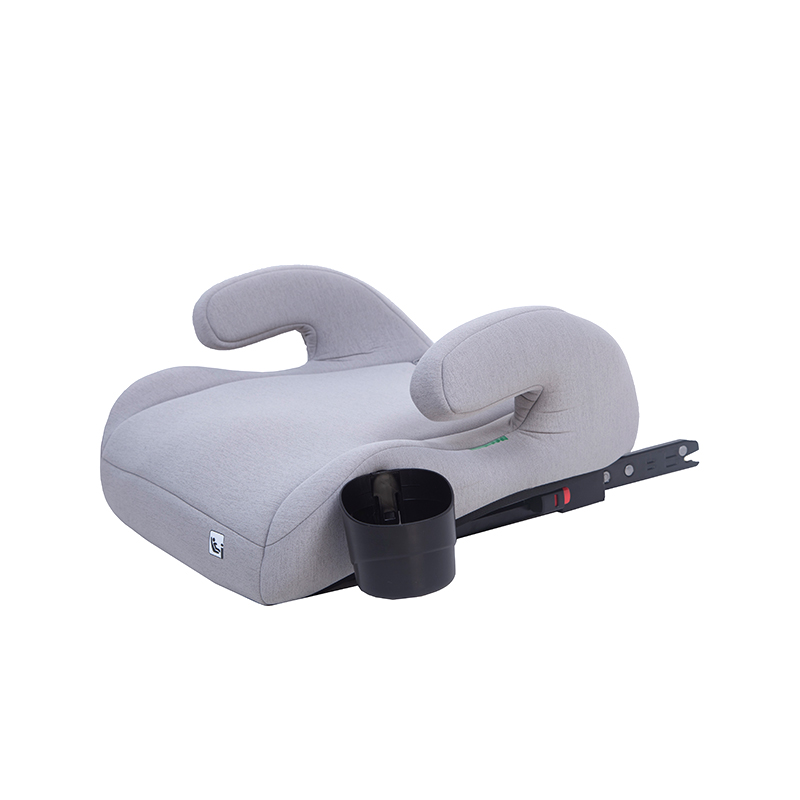 OG303B i-Size Booster Seat for 100–150 cm ChildrenAn R129 booster for 100–150 cm with adjustable headrest and optional ISOFIX, suited to height-grouped material specifications.View Product →
Heat, Smell and Off-Gassing in Daily Use
A strong smell is not proof of a dangerous seat, but it is a useful warning signal that deserves a second look.
New foam, adhesives and packaging release volatile organic compounds for the first weeks, and a car parked in summer sun accelerates that release. These emissions are usually short-lived and fall well below irritation thresholds, but they can matter for a newborn or a child with sensitivities. Practical handling looks like this:
- Air the seat out for one to two weeks in a shaded, ventilated space before first use.
- Wash the cover according to the care label, then dry it fully before refitting.
- Ventilate the cabin for a minute before buckling a child in on hot days.
- Avoid perfumed cleaners, which mask odour without removing the source.
- Keep a spare cover so washing is not postponed.
Does the Age Band Change the Material Question?
No, and if anything the stakes rise with age, because a booster used for six years exposes a child to the same fabric for far longer than a one-year infant carrier.
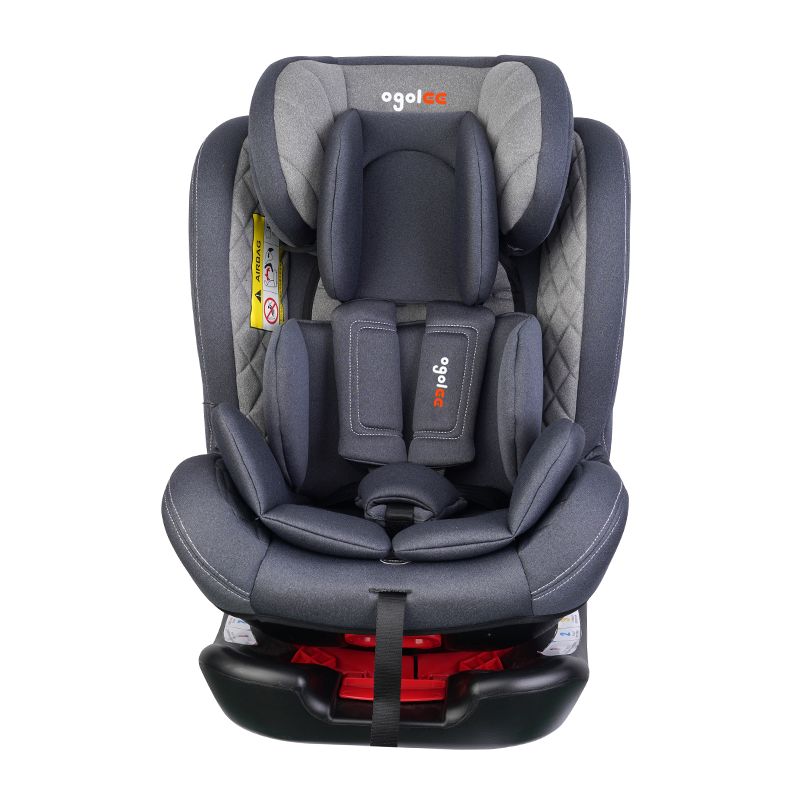
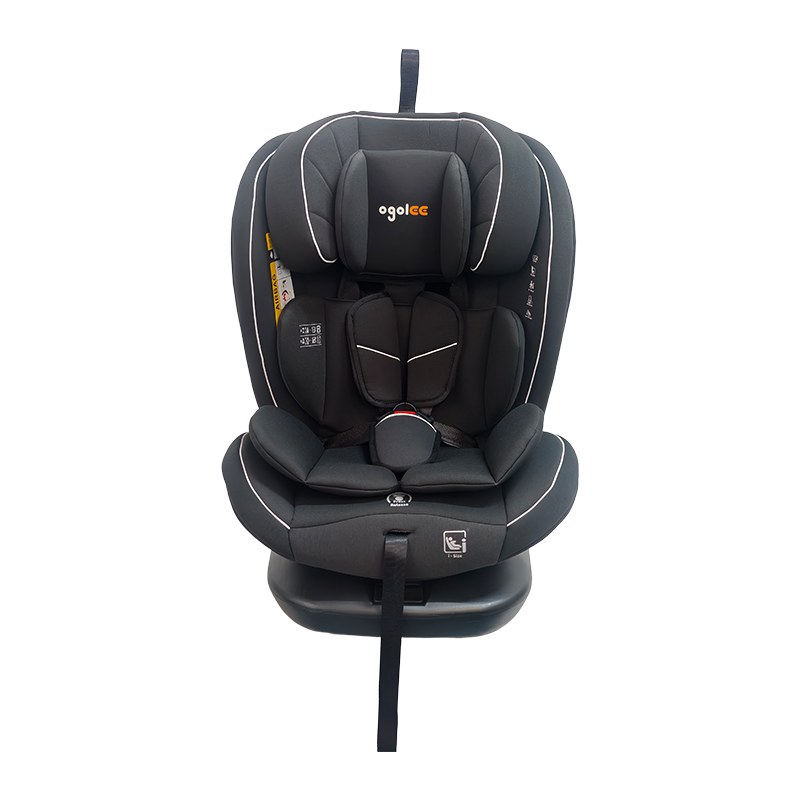
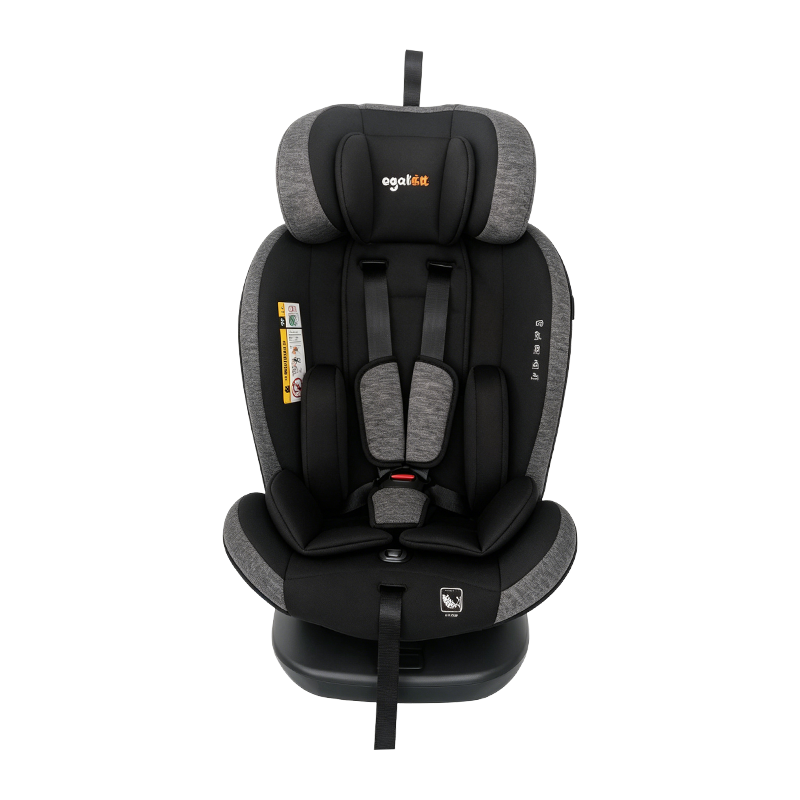
A seat built for 40-150cm covers the whole journey from newborn to about twelve years, which is convenient for families and demanding for materials: the same cover has to survive repeated washing, sun exposure and crumbs without shedding dye or finish. Long-life models are therefore the ones where a documented fabric specification is most valuable. Rotation and recline features, such as those on the OG801A, are comfort decisions; the foam and cover specification is a health decision, and the two should be evaluated separately.
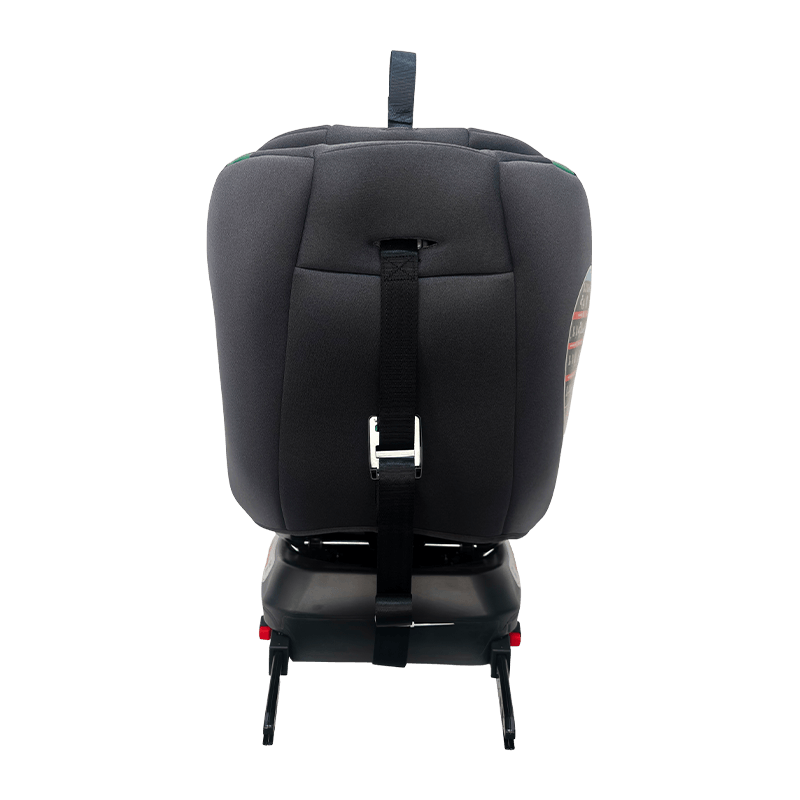 OG801A 360° Rotating i-Size Car Seat, 40–150 cmA 40–150 cm rotating, reclining seat whose long-life cover specification deserves separate documentation from comfort features.View Product →
What Wholesale Buyers Should Ask Before Committing
For importers and own-brand programmes, the chemical question is a documentation question, and it should be closed before the purchase order rather than after the first complaint.
| Document | What good looks like | Red flag |
|---|---|---|
| Flame retardant declaration | Model-level statement naming foam and cover materials | "Our materials are safe" with no model reference |
| Textile test report | Named standard, limit values, test date, fabric identified | Report for a different fabric, or expired |
| Type approval | ECE R129 or R44 number matching the product label | Number that does not match the sample |
| Material specification | Fibre percentages, foam type, shell process | "High quality fabric" and nothing more |
| Care instructions | Wash temperature, drying limits, refitting steps | Cover not removable, or no care label |
FAQ
Is a more expensive car seat automatically non toxic?
No. Price correlates with features, branding and testing volume rather than with foam chemistry. Cheap and expensive seats alike can be flame-retardant-free, and both can carry a treated polyurethane pad. Ask for the material list, not the price tag.
Can a seat be flame retardant free and still pass the standard?
Yes. ECE R129 regulates how a material burns, not which additive is used. Seats meet the requirement through inherent material properties, denser fabric constructions and design choices, which is why such models sometimes cost more to produce.
Does an OEKO-TEX label on the cover cover the whole seat?
It does not. That certification applies to the textile it was issued for. Foam, shell plastic, webbing and buckle hardware sit outside its scope and need their own declarations.
How do I reduce exposure during everyday use?
Wash the cover before first use, air the seat out for a week or two, ventilate the cabin on hot days, and avoid strong fragrances and solvent cleaners. None of these steps remove a treated foam, but they reduce surface residues and short-term emissions.
Do booster seats need the same checks as infant carriers?
They do, and often more so. A booster stays in the car for years, is exposed to more sun and more spills, and its cover is washed more frequently, so fabric quality and dye fastness matter throughout its working life.
The bottom line: "non toxic" is a claim, not a category, and the difference between two similar-looking seats sits in the foam, the fabric finish and the paperwork behind them. Start with a written flame retardant declaration, follow it with a textile test report and a matching type approval, and check that the cover can actually be removed and washed. That combination tells you more than any label wording ever will — and it is the same list whether you are buying one seat for your own child or a container load for a retail programme.