 English
 Español
 Deutsch
 русский

Rain is streaming down the windows, the school gate is about to close, and your three-year-old is arched like a small, indignant cat. In that exact moment, a 360 rotating convertible car seat proves its worth: instead of folding yourself into the back seat to fight a rear-facing harness, you stand beside the door, lift the child onto the swivelled shell, buckle the five-point harness in a normal standing position, and rotate the seat back to the travel direction. The crash physics have not changed. What has changed is that the seat actually gets used correctly, because loading no longer feels like a wrestling match.
Content
- 1 What Is a 360 Rotating Convertible Car Seat?
- 2 Safety Standards and Certification: Start with R129
- 3 What to Check Before You Buy a Rotating Convertible
- 4 What Are the Drawbacks of a Rotating Seat?
- 5 Which Families Benefit Most from 360° Rotation?
- 6 Frequently Asked Questions About 360 Rotating Convertible Seats
- 7 The Bottom Line
What Is a 360 Rotating Convertible Car Seat?
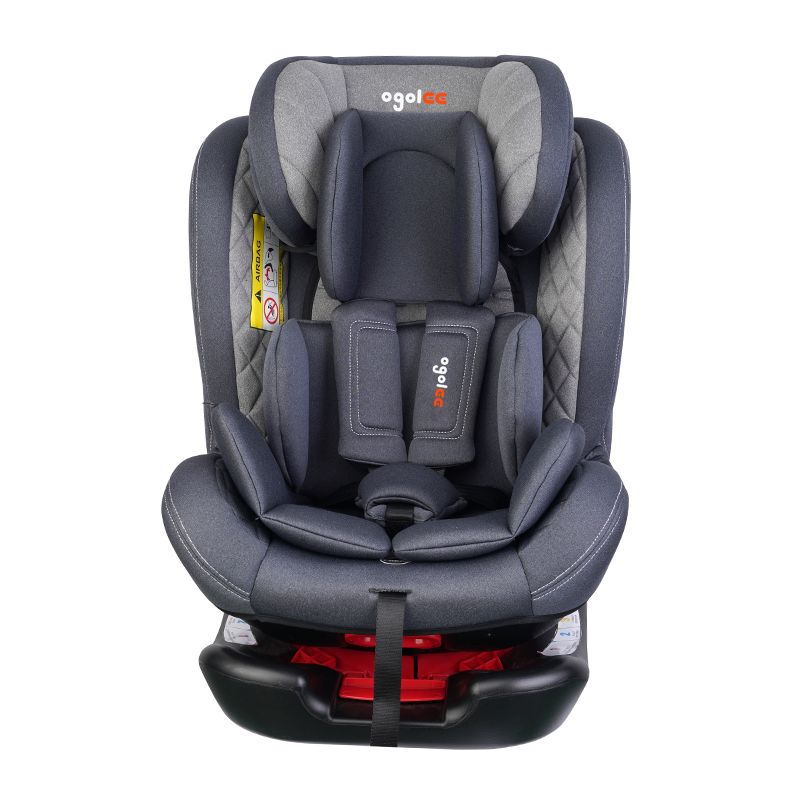
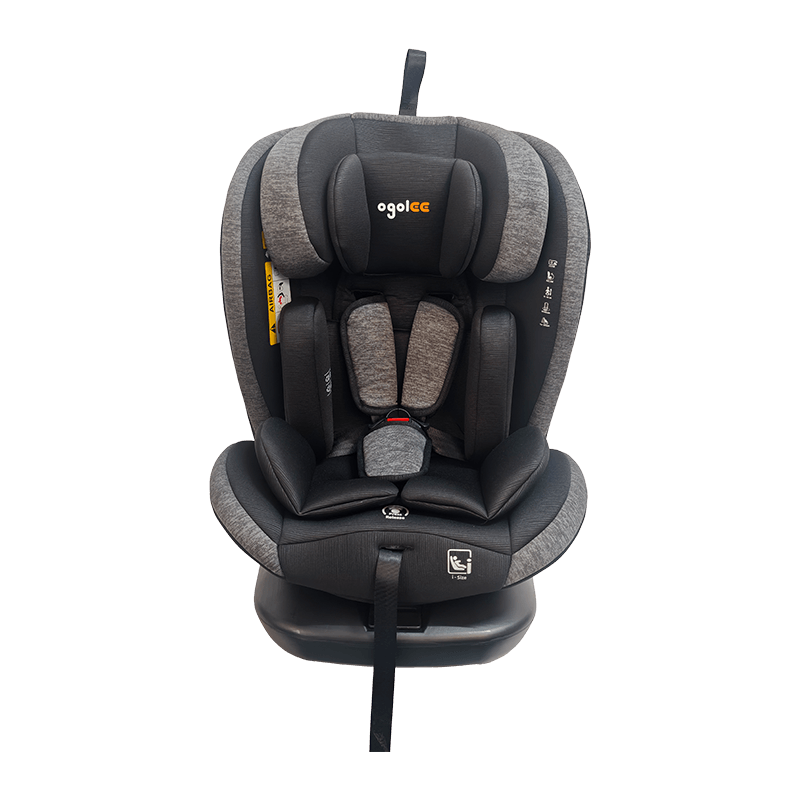
In one sentence: it is a convertible child seat—rear-facing for infants, forward-facing for toddlers, and in many models a highback booster afterwards—mounted on a base that swivels horizontally through 360 degrees. The swivel base locks onto the vehicle’s ISOFIX anchors, so the rotating ring carries the seat shell without breaking the structural connection to the car.
How the rotation mechanism works
- A release handle or button under the shell frees the rotation ring.
- The shell turns toward the opened door and usually locks at 90 degrees for loading.
- Once the harness is buckled, you spin the shell back to the straight-ahead position.
- A green lock indicator confirms that the rotation lock has engaged; the base cannot be driven in a sideways orientation.
Most R129 rotating seats cover a 40–150 cm height range, which spans roughly from a six-month-old to a twelve-year-old. That means one seat can replace three separate traditional stages, and it removes the problem of a seat becoming too small just after you have become comfortable with it.
Safety Standards and Certification: Start with R129
The conclusion is simple: if a rotating seat carries ECE R129 approval, it offers stricter protection than an equivalent R44 model, because side-impact testing is mandatory, the whole ISOFIX system is tested as one unit, and the size limits are defined by child height instead of weight.
| Criterion | R129 / i-Size | R44 / 04 |
|---|---|---|
| Size basis | Child height (cm) | Child weight (kg) |
| Mandatory side-impact test | Yes | No |
| Installation | ISOFIX based | Seat belt or ISOFIX |
| Rear-facing minimum | Until at least 15 months | Until 9 kg |
| Typical rotating range | 40–150 cm | 0–36 kg |
The practical impact of these differences: R129 keeps a child rear-facing for 12 to 18 months longer than the legal R44 minimum, and it is the only standard that tests side-impact protection with the same single-seat setup families actually buy. If you are comparing certificates, our R129 versus R44 differences article explains how the test speeds and dummy requirements differ.
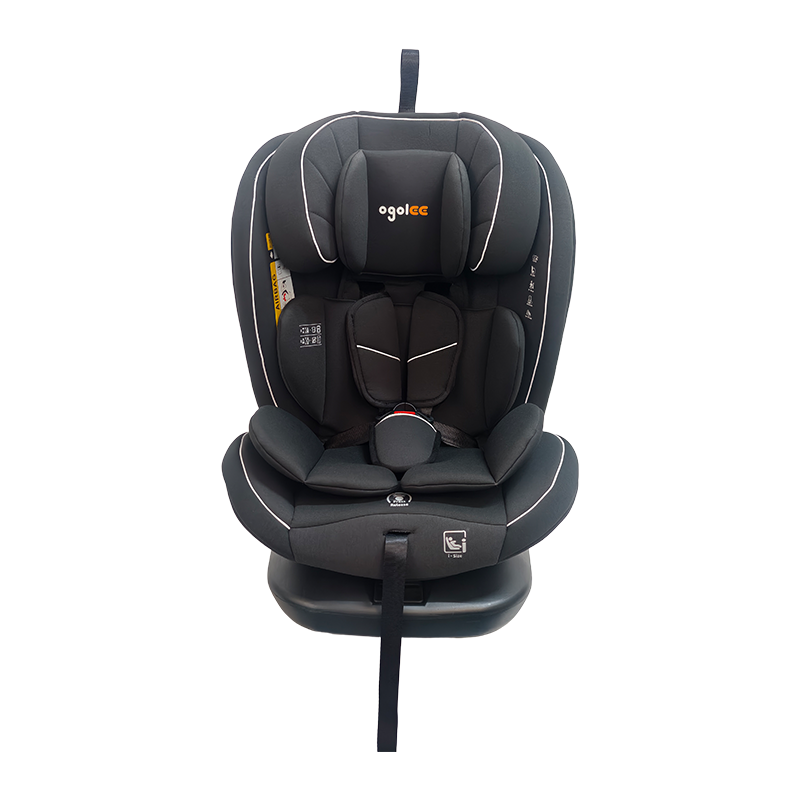
A factory R129 rotating model in the 40–150 cm group, such as the ISOFIX version with support leg and deep recline, shows how this standard is implemented in production: the swivel base is tested together with the shell, and the 360-degree ring is certified as part of the whole system.
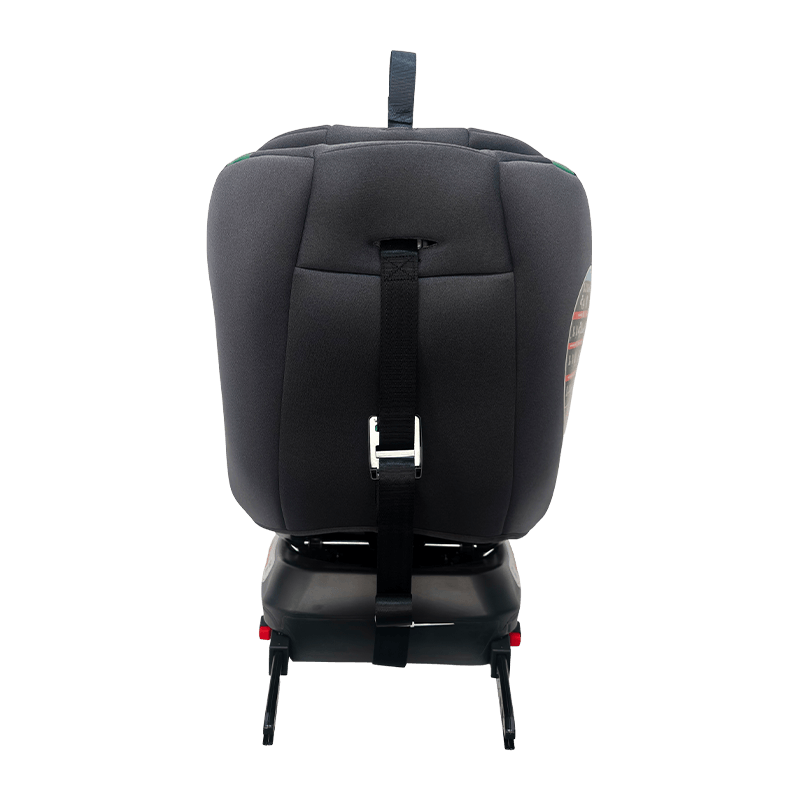 OG801A ECE R129 Rotating Isofix Car Seat for 40-150cmThis swivel seat with support leg and deep recline shows an R129 rotating system where the 360-degree ring is certified with the shell, covering forward and rearward facing up to 150 cm.View Product →
What to Check Before You Buy a Rotating Convertible
Start with the conclusion: the four decisive points are height coverage, rear-facing life, real-world vehicle fit, and the quality of the rotation lock and recline mechanism. A seat that fails on any of those will annoy you every single day, no matter how nice the fabric is.
Height coverage and rear-facing life
For an R129 seat, look for 40–150 cm coverage and keep the seat rear-facing until the child reaches roughly 105 cm instead of switching at an age. That single choice does more for crash protection than most premium extras, and the same seat still works for the forward-facing stage.
Real-world vehicle fit
Rotating seats are taller and wider than fixed bases because the rotation ring adds height. Measure the seat depth in your car and check whether the front seat has to move forward. A support leg reduces rocking and makes the base feel solid, while ISOFIX plus top tether is the most common configuration for group 2–3 stages.
Recline and harness adjustments
A deep recline—up to roughly 145 degrees in some group 1–2–3 models—matters for children who sleep on long trips, because an upright head can drift forward and wake a child. Look for a one-hand recline lever and a harness that tightens without rethreading the entire seat insert.
If your market still runs on R44 weight groups, a group 0–1–2–3 rotating model covers 0–36 kg, swivels through the same 360 degrees, and includes a newborn cushion and large recline angle.
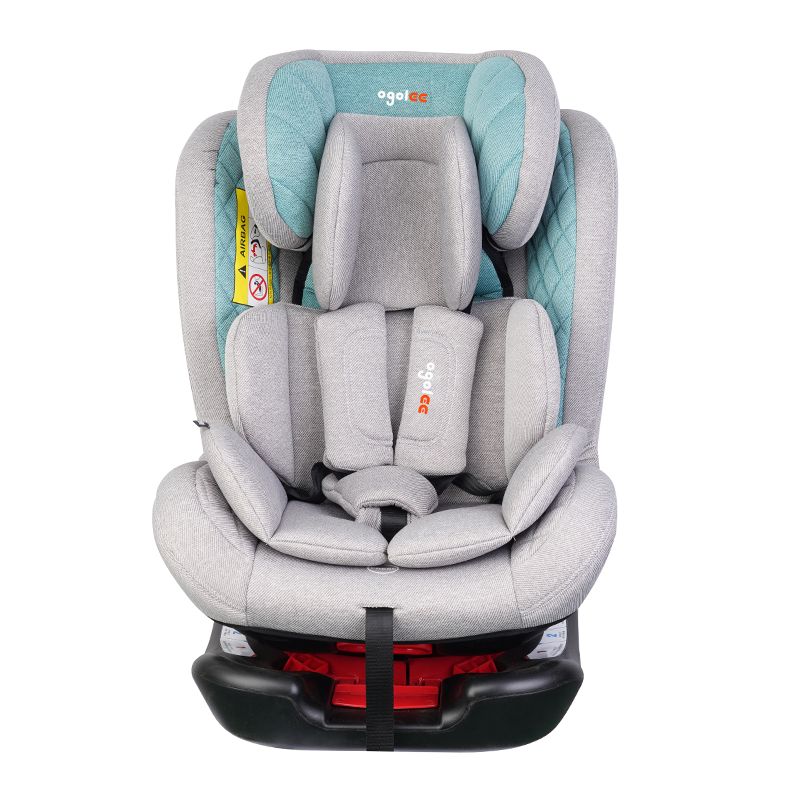 ZK701A Group 0-36kg 360-Degree Isofix Rotating Car SeatFor markets using R44 weight groups, this 0-36 kg rotating model offers 360-degree rotation, 165-degree recline, plus newborn cushion, ideal if you need a lifetime group 0-1-2-3 seat.View Product →
| Checkpoint | What to confirm | Why it matters |
|---|---|---|
| Rotation lock | Green indicator, firm resistance | Prevents accidental sideways driving |
| Rear-facing limit | At least 40–105 cm, better 40–150 cm | Longer rear-facing means reduced neck loads |
| Side-impact approval | R129 label and test report | Adds head and torso protection in lateral crashes |
| Harness adjustment | Tool-free, moves with the headrest | Correct fit keeps straps level and snug |
| Recline positions | 4–6 positions, up to 145 degrees | Sleeping children stay aligned in the seat |
| Cover removal | Machine-washable without tools | Simplifies cleaning after snacks and travel |
| Base weight | 9–13 kg, compare before transfer | Heavier bases reduce portability between cars |
What Are the Drawbacks of a Rotating Seat?
There are real trade-offs, and you should hear them before buying. The most honest answer is that rotating seats cost more, weigh more, and need more space than a simple forward-facing seat.
- Price. You are paying for a precision swivel mechanism on top of a normal seat, and the price difference is several tens of dollars over a non-rotating model with the same certification.
- Weight. The base alone often weighs 9–13 kg, so transferring it between cars is heavy work.
- Space. The rotation ring lifts the shell a few extra centimeters; in compact cars the front seat may need to move forward slightly.
- Moving parts. A rotation ring and lock mechanism require periodic inspection; a worn or blocked ring should be serviced rather than forced.
None of these are deal-breakers for daily drivers, but a family that drives twice a month should think carefully about whether the extra cost is justified.
Which Families Benefit Most from 360° Rotation?
Rotation is not a luxury feature; it is a practical aid for people who load a child in awkward positions. The families that get the most value are:
- Parents with back, knee, or mobility problems who cannot climb into the car to buckle a rear-facing child.
- Caregivers who switch the seat between two vehicles and appreciate the rigid ISOFIX base instead of a seat-belt installation.
- Drivers who park in tight spots or narrow garages where opening the door fully is impossible.
- Grandparents who transport children a few times a week and value a harness they can easily reach.
If you drive rarely, a conventional convertible seat is the more rational buy. If you buckle and unbuckle a child at least once a day, the rotating mechanism usually pays for itself in comfort and in the consistency of correct use.
Frequently Asked Questions About 360 Rotating Convertible Seats
Is it safe to drive with the seat rotated sideways?
No. Rotation is designed for loading only. The base locks the shell in the travel position, and the lock indicator must show green before the vehicle moves. No manufacturer certifies a sideways driving position.
When should my child switch from rear-facing to forward-facing?
Under R129, the minimum is 15 months, but the safer practice is to keep the child rear-facing until the rear-facing height limit marked on the seat is reached, usually around 105 cm. Never switch merely because a birthday has passed.
How long does a rotating convertible seat last?
Most manufacturers specify a service life of 6 to 10 years from the manufacture date. Replace the seat after any moderate or severe crash, even if no damage is visible, and check the lock, harness webbing, and shell for cracks before each use.
Can a 360 rotating convertible seat be used for a newborn?
Only if the seat is explicitly approved from 40 cm or from birth, and only with the newborn insert placed correctly. A 40–150 cm R129 seat normally covers newborns, while a 76–150 cm model is far too large and must not be used with an infant.
The Bottom Line
A 360 rotating convertible car seat is worth its premium for families who drive daily, load children in confined spaces, or want one certified seat that lasts from infancy to age twelve. Choose an ECE R129 model if you can; keep the child rear-facing as long as possible; and treat the rotation lock as a safety component, not a convenience toy.
Buying directly from a manufacturer matters for importers and retailers: you need test reports, stable production, and the ability to adapt the cover or logo for your own brand. Yougaole, as a factory with ECE R129, ECE R44, and 3C certification, offers rotating models in both the R129 and R44 lines and supports OEM/ODM development from drawing to mass production.
If this is your first rotating seat, start with the certification: confirm the ECE and 3C certified label, compare the rear-facing limits, and only then compare colours and cup holders.