 English
 Español
 Deutsch
 русский

The first second of a frontal crash is not the only moment that matters. After the impact, a rear-facing car seat can rebound backward toward the vehicle seatback with enough force to strain a child's neck. An anti-rebound bar is the component that stops that motion: a rigid bar, usually at the foot of the seat base, that presses against the vehicle seatback to limit backward rotation.
This article explains what an anti-rebound bar is, how it works in a collision, how it compares with a load leg, and what to look for when buying a car seat with this safety feature.
Content
- 1 What Is an Anti-Rebound Bar on a Car Seat?
- 2 How Does an Anti-Rebound Bar Work in a Crash?
- 3 Anti-Rebound Bar vs. Load Leg: What Is the Difference?
- 4 Why Rear-Facing Seats Need Anti-Rebound Protection
- 5 How to Check the Anti-Rebound Bar Before Every Ride
- 6 What to Look for in an Anti-Rebound Bar Car Seat
- 7 Frequently Asked Questions About Anti-Rebound Bars
What Is an Anti-Rebound Bar on a Car Seat?
An anti-rebound bar is a safety component located at the foot of a rear-facing car seat, and its job is to stop the seat from swinging toward the vehicle seatback during a collision.
When a car stops suddenly, the child restraint continues forward and then snaps backward. Without a bar, the seat can pivot around the ISOFIX anchors and strike the vehicle seatback with considerable force. The anti-rebound bar blocks that motion by bracing against the vehicle seatback.
Key characteristics:
- It is usually fixed to the seat base or integrated into the seat shell.
- It only applies to rear-facing seats because rebound happens mainly in that orientation.
- It works together with other features such as ISOFIX, top tether, and load leg.
If you need a refresher on the safety rules behind these seats, see what the UN R129 European safety standard requires.
How Does an Anti-Rebound Bar Work in a Crash?
During a frontal collision, the seat shell rotates and then rebounds backward toward the vehicle's rear seatback. The anti-rebound bar contacts the seatback early, using the vehicle body as a support structure.
The sequence is:
- At impact, the child's body is pushed into the rear-facing seat shell, spreading the force across the back and head.
- The car seat rotates toward the front of the vehicle, following the crash direction.
- Stored energy in the seat and harness pulls the seat back toward the rear seatback.
- The anti-rebound bar hits the vehicle seatback and stops further movement.
- The child's head and neck do not experience the abrupt rearward snap that would otherwise occur.
By keeping the seat shell stable, the bar lowers the rotational acceleration transmitted to a child's neck, which is one of the most vulnerable areas in a crash.
Anti-Rebound Bar vs. Load Leg: What Is the Difference?
A load leg is not the same as an anti-rebound bar, although many premium seats come with both. The load leg extends from the seat base down to the car floor and limits forward rotation, while the anti-rebound bar limits backward rebound.
| Feature | Anti-rebound bar | Load leg |
|---|---|---|
| Primary role | Prevents rebound toward the vehicle seatback | Prevents forward rotation and forces energy down to the car floor |
| Position | At the rear or foot of the base, against the vehicle seatback | Vertical support from the base to the floor |
| Crash phase | Works after the initial impact, during rebound | Works during the initial forward movement |
| Typical use | Rear-facing infant seats and convertible seats | Rear-facing and forward-facing seats with ISOFIX base |
Some seats use one or both. For rear-facing protection, an anti-rebound bar is especially useful because the rebound motion can be fast and forceful.
Why Rear-Facing Seats Need Anti-Rebound Protection
Rear-facing seats already protect a child's spine by spreading crash forces along the back. But the rebound phase can still cause injury if the seat swings freely.
Benefits of an anti-rebound bar:
- Reduces head movement in the rebound phase.
- Lowers neck forces during a rear-facing crash.
- Keeps the seat in a predictable position for better side-impact protection.
- Prevents the seat from striking the front seat or surrounding objects.
- Helps the harness and headrest stay correctly aligned with the child's body.
Many parents think the danger ends at the initial impact, but the rebound phase can be just as dangerous for a small child. A bar gives the head and neck a stable surface to stop against.
For parents who want to keep a child rear-facing for a longer time, the seat needs to combine a high height capacity with a stable base. A 40-150 cm R129 seat can cover the infant-to-booster period while still offering a rear-facing mode for younger children.
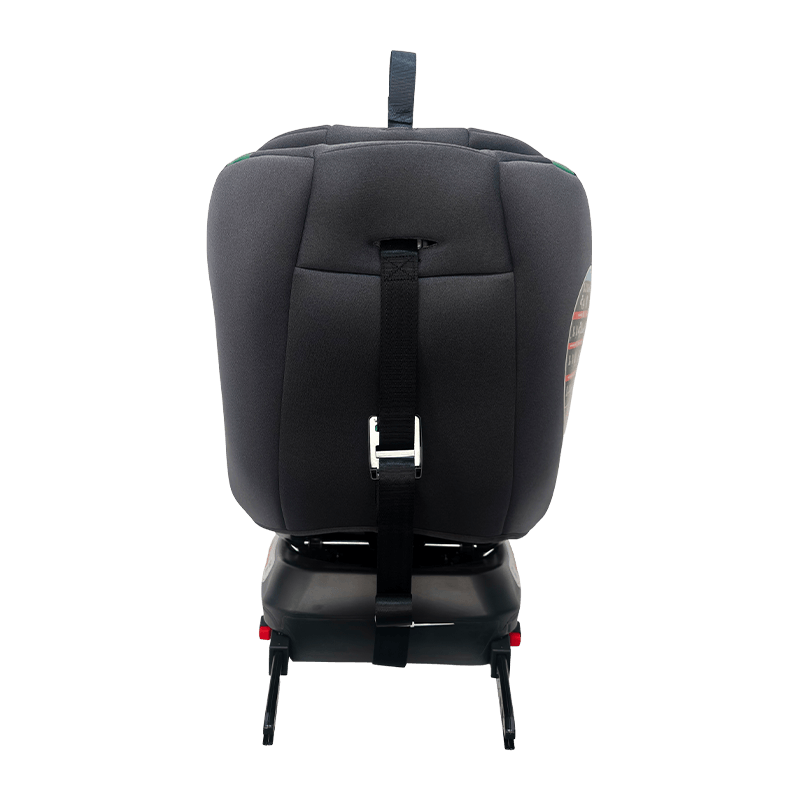 OG801A 40-150cm Rotating ISOFIX Child Car Seat ECE R129This rear- and forward-facing seat spans 40-150 cm with a 360-degree rotation and 145-degree recline. Its ten headrest positions and R129 approval suit parents seeking extended rear-facing use with a stable base.View Product →
How to Check the Anti-Rebound Bar Before Every Ride
A quick pre-trip check takes less than a minute and should be part of your regular routine.
- Press the seat base firmly into the vehicle seatback.
- Check that the anti-rebound bar is fully extended and locked.
- Look at the contact point: the bar should touch the seatback across its full width.
- If the bar is adjustable, ensure it is set for the current seat angle.
- After installing, give the seat a firm push. There should be little or no movement where the bar meets the vehicle seat.
If you feel the bar hovering or notice plastic creaking when you push the base, lower the seat angle or adjust the vehicle headrest until contact is solid.
What to Look for in an Anti-Rebound Bar Car Seat
Not all anti-rebound bars are equally effective. The seat shell, the bar's rigidity, and the mounting system all affect performance. Start with the safety standard, not the marketing copy.
Certification Matters
In Europe, R129 (i-Size) seats are tested with rebound in mind. Older R44 seats also provide protection, but R129 uses more modern crash tests and includes side-impact requirements. Always check the labels and certificates before purchase. A seat that meets a recognized standard has already passed controlled crash tests.
Build Quality and Materials
The anti-rebound bar must stay rigid under crash loads. Look for a seat made with sturdy materials, clean mold lines, and no visible deformation in the plastic shell. If you are sourcing from a factory, inspect the production process and ask for test reports.
Integration with ISOFIX
A separate anti-rebound bar clipped to the base is common. Some integrated 360-degree rotating seats use a foot or bar that contacts the vehicle seatback. Both are valid, but the connection between the seat and the vehicle must be tight and stable.
If you want a single solution from birth to around 12 years, a 0-36 kg R44 seat with ISOFIX and 360-degree rotation is another option. This type of seat gives you one product that can adapt as your child grows.
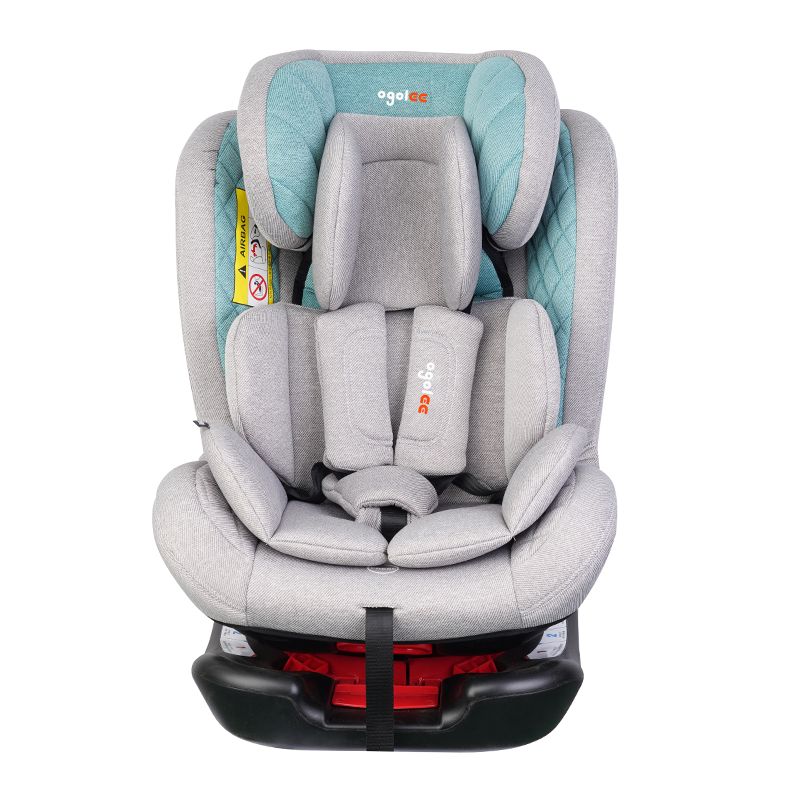 ZK701A 0-36kg 360-Degree ISOFIX Group 0-1-2-3 Child SeatCovering 0-36 kg from birth to about 12 years, this R44-approved seat offers 360-degree rotation, 165-degree recline, and a six-position headrest. ISOFIX and top tether installation plus a washable cover make it a versatile single-seat solution.View Product →
Before you commit to a seat, review the manufacturer's certification documents and confirm that the anti-rebound bar works with your car's seat geometry. The bar should sit flush against the seatback, not hover above it.
Frequently Asked Questions About Anti-Rebound Bars
Below are direct answers to common questions about this feature.
Do all rear-facing car seats have an anti-rebound bar?
No. Many basic seats rely on a top tether or load leg instead. Anti-rebound bars are becoming more common on R129 i-Size seats, especially models with a base or 360-degree rotation.
Can I use an anti-rebound bar with any car seat?
No. The bar is designed and tested for a specific seat model. Mixing parts from different models can void the safety certification and change the seat's crash performance.
Is an anti-rebound bar the same as a load leg?
No. A load leg extends to the car floor to reduce forward rotation. An anti-rebound bar contacts the vehicle seatback to reduce backward rebound. Some seats include both.
Does an anti-rebound bar make the seat harder to install?
It adds a small step, but most modern ISOFIX bases lock into place with one click. The bar should sit flush against the vehicle seatback. If it does not, you may need to adjust the headrest or seat angle.